
3D Printing
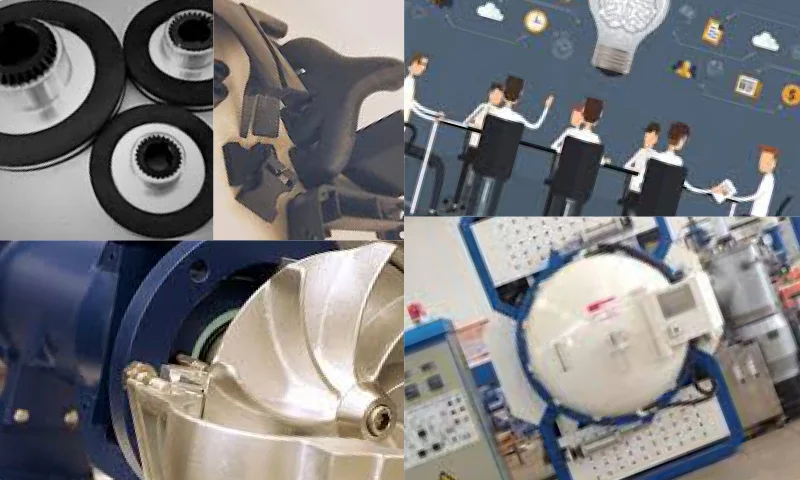
3D Printing Technologies
3D printing is also known as desktop manufacturing or additive manufacturing. It is a prototyping process in which a real object is created from a 3D design. You can meet your 3D printing needs thanks to a service that provides all these services. The digital 3D model is saved in STL format and then sent to a 3D printer. The 3D printer then prints the design layer by layer, creating a real object.
3D Printing Applications
There are several different 3D printing technologies. The main differences are how the layers are formed to create the part. Selective Laser Sintering (SLS), Fused Deposition Modeling (FDM), and Stereolithography (SLA) are the most commonly used technologies for 3D printing. Selective Laser Sintering (SLS) and Fused Deposition Modeling (FDM) use melted or softened materials to produce layers. One of the most important applications of 3D printing is the medical industry. With 3D printing, surgeons can produce patient-specific 3D printed models of the patient's body parts or organs. They can use these models to plan and practice surgeries and potentially save lives. 3D printing makes it possible to create a part from scratch in just a few hours. It allows designers and developers to go from a flat screen to a full, physical part. Today, almost everything from aviation components to toys is built with the help of 3D printers. 3D printing is also used for jewelry and art, architecture, fashion design, art, architecture, and interior design.





