
What is a Nut?
How Does a Nut Work?
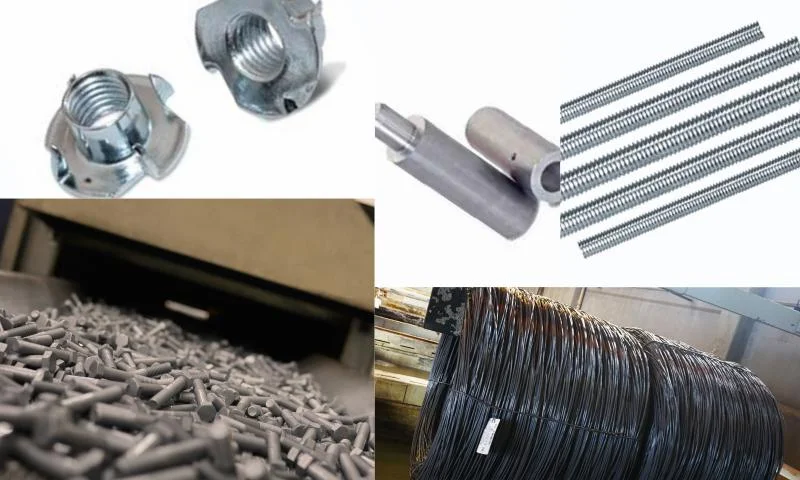
A nut is used in conjunction with a bolt or stud. It has the feature of being removable. For this reason, it is called a detachable fastener. Nuts are tapped in their middle sections. In other words, a thread is opened. They can be described as simple parts with a hole in the middle. There are different types of nuts depending on their shape and properties. These materials are frequently used in the construction and machinery sectors. You can find different nut models on our site.
What are the Types of Nuts?
Nut or bolt fasteners exhibit friction to hold onto each other. In addition, there is friction in the seating parts where the bolt and nut join. This friction ensures that the two parts lock onto each other. To prevent the bolt and nut connection from loosening and unscrewing due to vibration after a while, the nut and bolt must be tightened properly with adequate torque. This ensures that the bolt or stud elongates slightly and the parts compress slightly. In this way, the bolt and nut parts behave like a spring, ensuring that the friction force between the connecting parts is never zero. If the friction force becomes zero, the fasteners will loosen and potentially unscrew. There are various nut models used in different areas. Nut threads can be metric or inch in size depending on the standard. Mostly, nuts are made of steel. Nuts are classified according to their strength, such as 4, 6, 8. This indicates 1/10 of the maximum stress applied to the nut. Nuts are products used in many places. Besides, they are indispensable for most materials. A nut is a very important connecting part. It is frequently used in sectors such as automotive, furniture, and natural gas. In these sectors, it allows various components to be connected to each other. The nut is the most important auxiliary fastening tool after the bolt.





