
The Importance of Quality Control in PCB Assembly Services
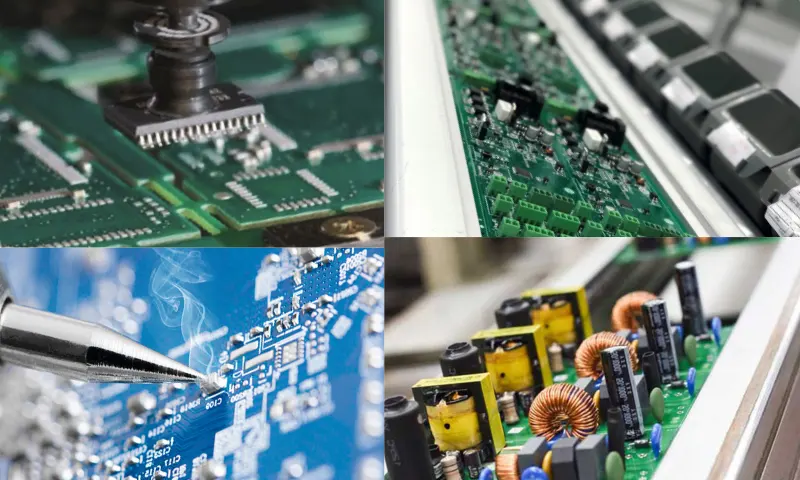
PCB Assembly and Quality Control Methods Used
Quality control in PCB assembly services is the most critical stage that ensures the reliability and longevity of an electronic product. You can visit https://www.sceelektronik.com/hizmetlerimiz/pcb-dizgi/ for more information about PCB assembly. Even the smallest error in the assembly process can lead to the board not working, malfunctions, or performance losses. Therefore, every step, from pre-production file checks to final functional tests, must be carried out meticulously. Quality control is important not only for detecting errors but also for improving production processes and reducing costs. Professional PCB assembly services guarantee this with tests conducted in accordance with international standards.
The Role of Final Checks and Functional Tests in PCB Assembly
The answer to the question of how quality control is carried out in PCB assembly services can be explained by the combination of multiple testing techniques. The DFM (Design for Manufacturability) analysis performed at the beginning of production reveals potential design errors before the process begins. AOI (Automated Optical Inspection) tests performed after assembly detect placement errors and soldering problems with high precision. X-ray inspections reveal soldering defects that are not visible under BGA components, which are closed on the underside. For THT components, visual inspection and post-wave soldering tests are performed to eliminate the possibility of missing, incorrect, or faulty soldering. The final stage of quality control is testing the board in accordance with its actual operating conditions. A completed PCB assembly product is never considered fully accepted without functional tests. In these tests, many parameters such as the board's power connections, signal paths, sensor responses, and communication protocols are evaluated. If necessary, the electrical accuracy of each point of the circuit is checked with ICT (In-Circuit Test) methods. Once these stages are completed, it is ensured that the product will work without errors.





